An alarm system is the first line of defence against intruders and one of the most effective ways to prevent break-ins and theft. When the control panel receives a signal from one of its sensors, it sends a message to the monitoring dispatch centre and activates the connected sirens locally, to alert property owners and deter intruders.
A burglary alarm system consists of a control panel that monitors connected sensors, which can be programmed and controlled via interfaces (keypads or an iOS/Android app). There is a wide range of specialised sensors: passive infrared (PIR) and microwave (MW) motion sensors, perimeter sensors (magnetic contacts), glass-break sensors, vibration sensors, gravitational sensors, and more.
The system can include panic buttons or remote controls that will instantly alert the dispatch centre if activated by the user — for example, when an intrusion attempt is observed before it occurs.
Monitoring means continuously receiving signals transmitted by local alarm systems to the dispatch centre and managing them according to the type of event reported. Dispatchers interpret each signal received from alarm systems and alert mobile response crews to proceed immediately to the site.
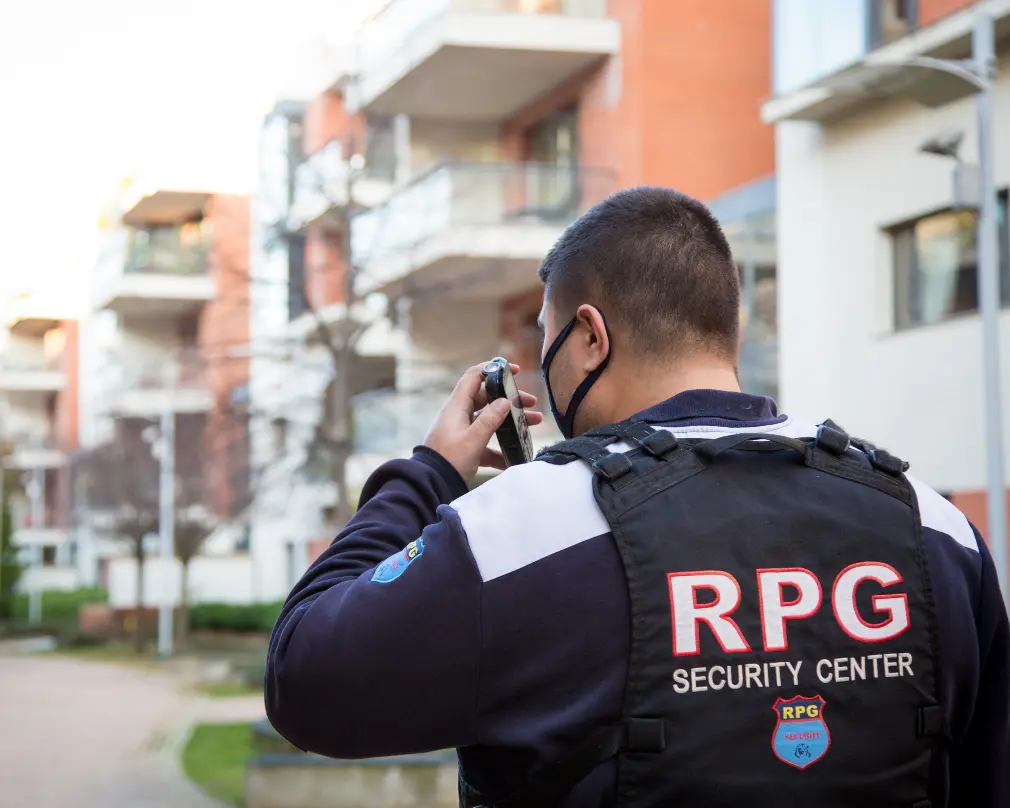
Rapid response means deploying response crews as quickly as possible to monitored sites in the event of an alarm. Upon receiving a burglary or panic signal, the 1–2 nearest crews will be alerted in the event of a burglary, and 2–3 crews in the event of a panic button activation (depending on the signals received at the dispatch centre, more than 3 crews may be dispatched in certain situations).